



Any safe project starts before anyone works at height. Whether this be a new roof, repairs, or a larger construction project, scaffolding safety is the first thing you should really consider.
Why? Well, poorly planned scaffolding creates immediate risk for workers, your customers, and the public.
This guide explains why scaffolding regulations matter, what they help prevent, and how choosing a professional scaffolding company can make your project safer, smoother… and all-round better!
Why Does Scaffolding Safety Matter?
Scaffolding gives workers safe access to areas they could not otherwise reach. But it only protects people when it is designed, erected, checked and used properly.
Unsafe scaffolding can lead to:
- Falls from height
- Unstable working platforms
- Delays to the project
- Damage to property
- Public safety risks
- Stress for the person organising the work
Good scaffolding safety is not just about meeting regulations. It is about protecting the whole project from avoidable problems.
What Do Scaffolding Safety Regulations Help Prevent?
Scaffolding regulations are designed to reduce risk during work at height. They help make sure the scaffold is suitable for the job and safe to use.
Key areas include:
- Safe access and exit points
- Stable working platforms
- Suitable edge protection
- Correct loading
- Competent erection and dismantling
- Regular scaffold checks
- Safe use during the project
This is where scaffolding health and safety becomes practical. It is not just paperwork… it’s what helps workers do their job safely and gives customers confidence that the site is being managed properly.
Domestic Scaffolding Safety: What Homeowners Should Know
For you standard homeowner, scaffolding is necessary for smaller projects such as roof repairs, chimney work or extensions – but just because they’re smaller in scale, it doesn’t mean safety doesn’t matter.
For roofing projects, temporary roof scaffolding can help protect the property and provide safer access while work is carried out.
With scaffolds sitting close to pavements, poor planning can lead to problems for the public – and more stress for you from the off.
A professional scaffolding company should look at the property, access points, ground conditions and type of work before recommending the right structure.
Commercial Scaffolding Safety: Reducing Risk and Disruption
Commercial projects often involve more people, tighter deadlines and greater responsibility.
A scaffold may need to be planned around staff, customers, tenants, deliveries or public access. If access is unsafe or poorly managed, the project can slow down quickly.
For commercial sites, safe scaffolding can help:
- Protect workers and visitors
- Keep entrances and key areas clear where possible
- Reduce disruption to business operations
- Support contractors with reliable access
- Keep the project moving safely
This is why scaffolding health and safety should be built into the project from the start.
What Should a Safe Scaffolding Company Provide?
Simple – they should really provide all of the following:
- Safe scaffold erection and dismantling
- A structure suited to the project
- Stable working platforms
- Safe access points
- Guardrails, toe boards and edge protection
- Clear guidance on safe use
- Public safety measures where needed
- Insurance
- Regular scaffold checks
- Visual scaffolding checks
- Clear communication throughout the job
Before work even begins they also should assess the site, including: ground conditions, working height, nearby pavements, roads and any risks to workers or the public.
Questions to Ask Before Hiring a Scaffolding Company
Here are eight helpful questions to ask yourself before booking scaffolding:
- Have you worked on similar domestic or commercial projects?
- How will you assess the site?
- What type of scaffold is best for this job?
- How will access and safety be managed?
- Will the scaffold be checked before use?
- Are you insured?
- How long will installation and dismantling take?
- Can you provide testimonials or examples of previous work?
These questions ultimately help you move beyond the thought of the price and focus on the things that matter – safety, reliability and suitability.
Before making a decision, it can also help to follow a clear step-by-step guide to hiring scaffolding so you know what to check before booking.
Why the Cheapest Scaffold Can Actually Cost You More
No one likes a cheapskate, and the same sentiment can be applied when buying scaffolding. And, in fact, the cheapest scaffolding can often become the most expensive choice!
Delays, poor communication, unsafe access or changes once work has already started can all lead to hidden fees.
A better approach is to choose scaffolding based on safety trust, which begs the question: means asking: who should I trust with my scaffolding project?
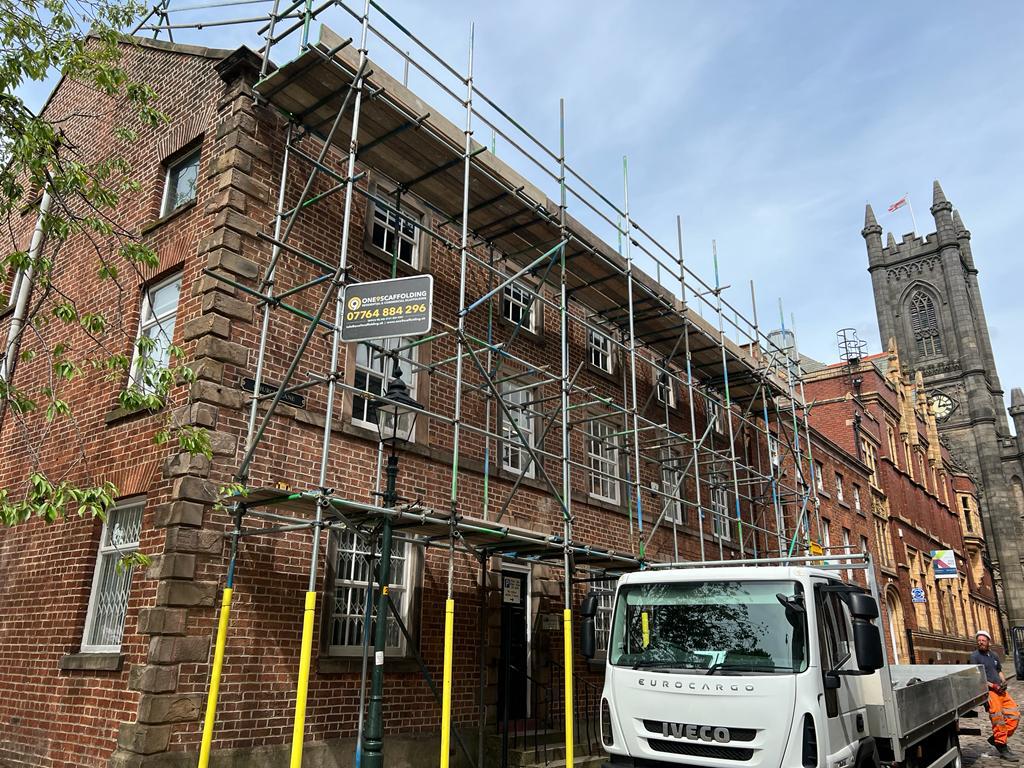
How One9 Scaffolding Supports Safer Manchester Projects
One9 Scaffolding provides professional scaffolding services for domestic and commercial projects across Manchester and the surrounding areas.
The service is designed to support safe access for a wide range of project types, including home repairs, renovations, roofing work, maintenance, and commercial projects.
From the first enquiry to dismantling, the aim is to make scaffolding straightforward, safe and suited to the job.
‘After a disappointing experience with a previous contractor, John and his team ticked every box. They delivered a professional service, completed the job on time and offered a competitive price. I was 100% satisfied,’ tells one happy customer from One9 Scaffolding.
Make Scaffolding Safety Your First Step!
Scaffolding safety is the foundation of a, well, safer project.
By choosing a professional scaffolding team from the start, you reduce unnecessary risk, protect workers and the public. What’s not to like?
The result is a better one. A site that feels organised, compliant and easier to manage, with fewer delays, and fewer worries.
Planning work at height in Manchester? Contact One9 Scaffolding today for a free quote and put safety in place before your project begins.